
How Do I Fit Replacement Worktops Without Replacing Cabinets?
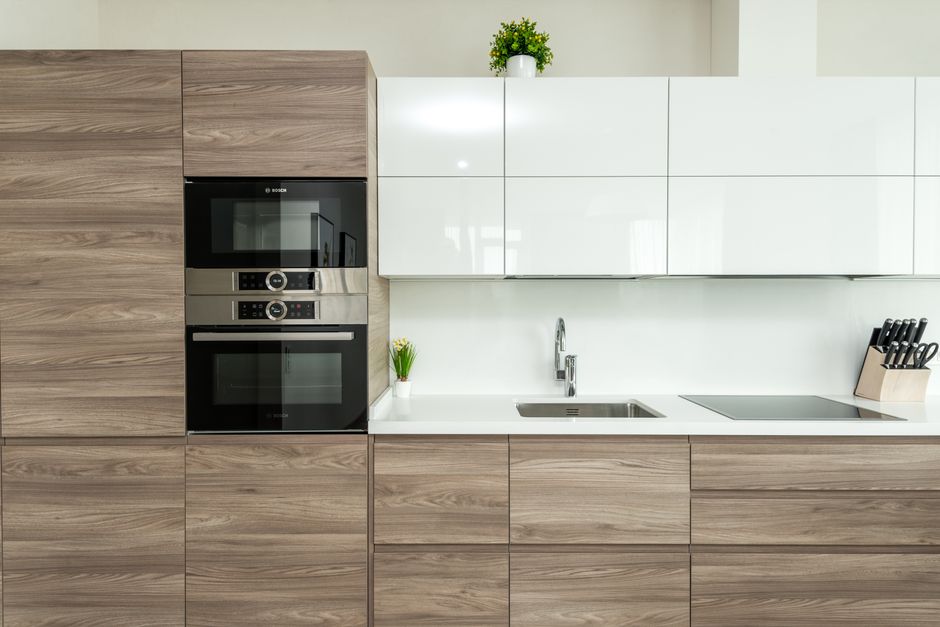
You can fit replacement worktops while keeping existing cabinets if the units are secure, level, supported and in good condition. Check the backsplash, sink and hob before ordering, then disconnect affected services and remove the old surface. Laminate can suit a confident DIYer; stone generally needs specialist templating and fitting. Compare itemised quotes that include removal, cut-outs, installation and any plumbing or gas work.
Can I replace my kitchen worktops without replacing the cabinets?
Yes. You can keep the cabinets if their tops are level and in good condition; Checkatrade notes that many worktops can be fitted over existing cabinet tops. The decision turns on the support beneath the surface, not simply whether the doors still look presentable.
Before measuring, check that base units are securely fixed, level side to side and front to back, and properly supported. Howdens requires units to be fixed to the wall, level in both directions and set at their final height before bespoke templating. It also calls for battening or support where gaps exceed 600mm, with additional support potentially needed around sink or hob areas wider than 600mm.
Use a fixed order: inspect and correct the cabinets, finalise appliance positions, then arrange measurement or templating. Howdens says wall alterations and plastering should be completed before templating, while tiling and making good should follow installation. Clear the worktop surface and leave tiles, upstands, cladding and splashbacks off when a Howdens bespoke worktop is being templated.
Do not assume the old worktop is an accurate template. Checkatrade warns that its dimensions may not suit a new surface, particularly if you are changing thickness or replacing the sink or hob. Homebuilding also highlights that a thickness change can create problems with adjacent tiles and appliances. For a related cost checklist, see How Do I Replace a Kitchen Countertop Without Costly Surprises?
Can replacement worktops be fitted without removing the backsplash tiles?
Sometimes, but the tile position and new worktop dimensions decide whether they can stay. A surface that must slide beneath a low tile edge, or a change in thickness that alters the gap, can make leaving the backsplash in place impractical.
Check the tile-to-worktop joint and compare the planned thickness and finished height with the existing surface before ordering. Homebuilding specifically cautions that changing thickness without checking nearby tiles and appliances can lead to costly fitting problems. Howdens’ bespoke process takes the other route: tiles, upstands, cladding and splashbacks are not to be installed at templating, and tiling and making good are completed after the worktop is fitted.
That sequence gives the installer a clear edge and leaves the final joint to be finished after installation. If keeping the tiles is important, ask the fitter to assess the exact edge, access and dimensions before the old surface is removed. Confirm who is responsible for any tile removal, reinstatement or making good in the written quote.
Do I need to remove the sink and hob before replacing a worktop?
The sink and hob usually need to be disconnected or removed as part of replacing the surface, and affected water, gas or electricity supplies must be dealt with before removal. Homebuilding says to disconnect affected services before taking out the old worktop; gas work may require a Gas Safe engineer.
For templating, have the sink, tap and hob available along with their installation instructions, and finalise their positions. Howdens requires these details for bespoke worktops. That lets the supplier plan cut-outs around the actual fittings rather than relying on an old opening that may differ.
For a like-for-like sink replacement, match the new sink to the exact dimensions of the existing cut-out. Homebuilding’s sink guide says laminate can be cut to accommodate a larger sink, while enlarging a stone cut-out requires a professional. Isolate the water before disconnecting pipework, then test for leaks after reconnecting the tap and waste.
Material determines how much work can be done on site. Checkatrade says laminate can suit a confident DIYer, with exposed edges—especially around sink cut-outs—sealed to protect the chipboard core from moisture. Stone and engineered stone require specialist cutting and installation. Homebuilding notes that quartz cannot be cut at home and that granite can weigh as much as 95kg per square metre, so plan suitable support and lifting help.
How should I compare fitting choices and costs?
Compare the whole job, not just the price per metre. Checkatrade’s UK estimates for supply only on a 5m run are £200–£800 for laminate, £500–£1,100 for quartz and £550–£1,150 for granite. Its estimated average labour costs are £50/m² for laminate, £110/m² for quartz and £150/m² for granite, with an overall labour average of £100/m².
| Material or item | Published estimate | What to check |
|---|---|---|
| Laminate, supply for 5m run | £200–£800; £500 average | Fitting, removal and sealing of cut edges |
| Quartz, supply for 5m run | £500–£1,100; £800 average | Specialist templating, fitting and cut-outs |
| Granite, supply for 5m run | £550–£1,150; £850 average | Specialist handling, support and cut-outs |
| Labour estimate | Laminate £50/m²; quartz £110/m²; granite £150/m² | Confirm exactly which work the labour covers |
| Quartz or granite cut-out | £180 unpolished; £185 polished | Check finish and number of openings |
These figures are estimates, not an all-in price for every kitchen. Checkatrade notes that old-worktop removal and disposal may not be included. Request an itemised quote covering supply, measuring and cutting, sink and hob cut-outs, removal, fitting, fixings and sealants; separately confirm any cabinet levelling, plumbing reconnection or gas disconnection.
A practical quote request is: “Please list supply, templating, cut-outs, removal and disposal, fitting, finishing, and any plumbing or gas work as separate items.” Then compare like with like. A lower supply price can become a more expensive project if essential preparation or disposal is missing.
Frequently Asked Questions
How much does it cost to replace kitchen worktops, including fitting and removal?
Checkatrade lists supply-only estimates for a 5m run of £200–£800 for laminate, £500–£1,100 for quartz and £550–£1,150 for granite. Average labour estimates are £50/m² for laminate, £110/m² for quartz and £150/m² for granite; removal and disposal may be extra, so ask for an itemised quote.
Can I fit replacement worktops myself, or do stone worktops need a specialist?
A confident DIYer may be able to fit laminate, provided the units are aligned and cut edges are sealed. Stone and engineered stone need specialist cutting and installation, and bespoke worktops are commonly templated before fabrication.
What should I check about my cabinets before new worktops are installed?
Check that the base units are in good condition, securely fixed, level from side to side and front to back, and properly supported. Correct alignment and any required support before templating; do not force a new worktop onto badly aligned cabinets.
Sources
Related guides

How Much Do Replacement Kitchen Worktops Cost?
Replacement kitchen worktops range from a few hundred pounds for laminate to over £1,000 for stone, depending on material and included work.
How Do I Replace a Kitchen Countertop Without Costly Surprises?
Budget for countertop removal, cutouts, and plumbing; compare overlay options and coordinate your backsplash, sink, and installation schedule.

Trending Purses in 2026: Find a Style That Fits Your Life
Compare the 2026 bowling bag, East-West silhouettes and other purse trends by everyday use, outfit versatility and published prices.

What Is the Realistic Total Price of a Cruise Trip?
See how fares, taxes, gratuities, travel, and optional spending add up to a realistic cruise trip budget.